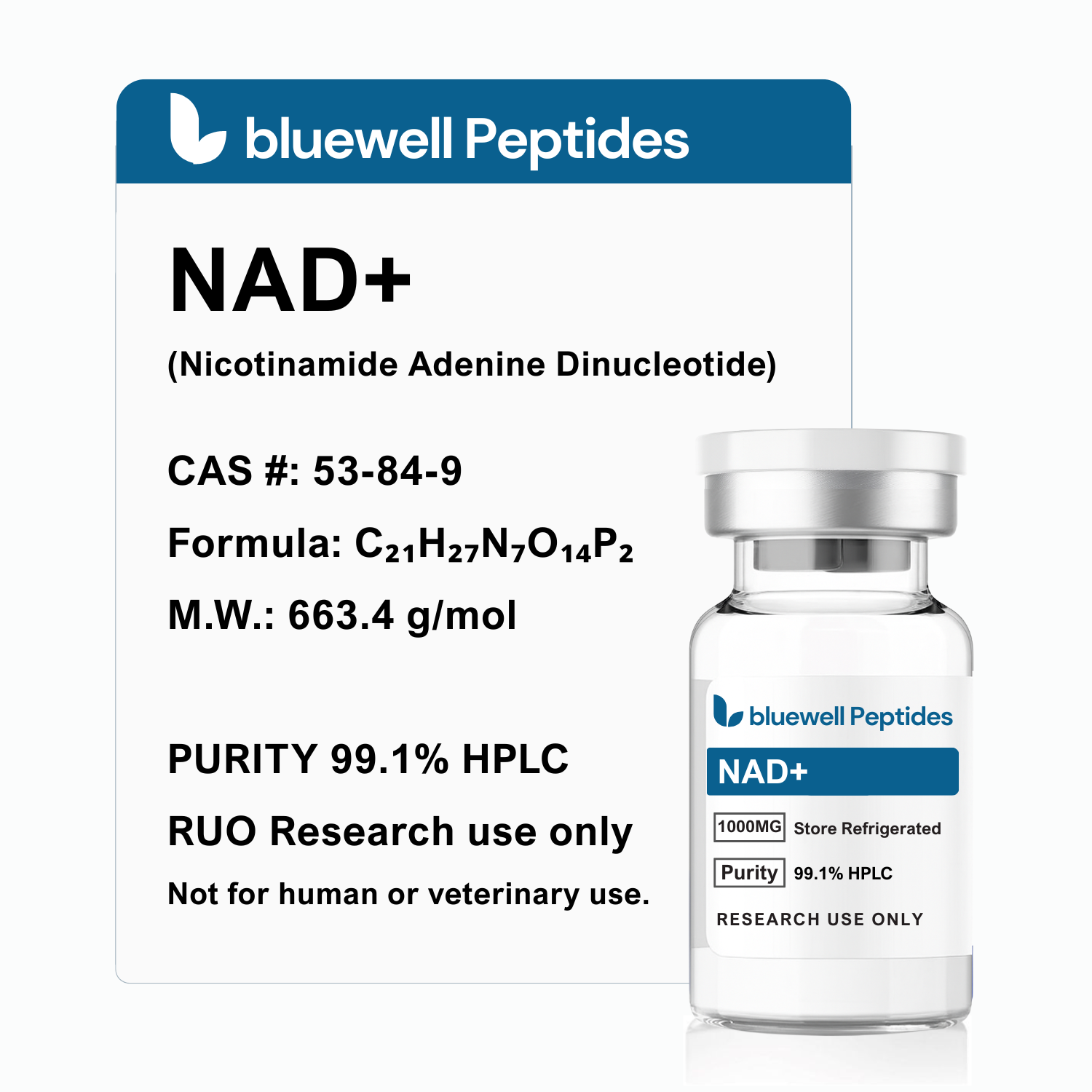
NAD+ 1000mg – Research-Grade Nicotinamide Adenine Dinucleotide
NAD+ 1000mg is a coenzyme studied in laboratory research involving cellular redox reactions, energy metabolism, and biochemical signalling. Bluewell Peptides supplies NAD+ 1000mg in lyophilised powder form for controlled laboratory research.
This listing provides product specifications and research context to support informed laboratory purchasing. Purity and batch documentation should be assessed using the applicable product-specific Certificate of Analysis (COA).
What Is NAD+?
NAD+ is the oxidised form of nicotinamide adenine dinucleotide, a coenzyme involved in electron-transfer reactions in biological systems. It is studied in biochemical research examining redox balance, metabolic processes, and enzyme-associated pathways.
NAD+ is distinct from NADH, its reduced form. The two participate in related but different roles in redox chemistry and are not interchangeable when a research protocol requires a specific form.
NAD+ 1000mg Product Specifications
| Specification | Details |
|---|---|
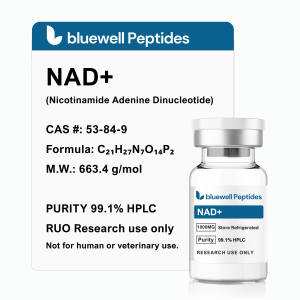
| Product name | NAD+ 1000mg |
| Catalogue number | BWG-NAD1000 |
| Compound name | Nicotinamide adenine dinucleotide, oxidised form |
| CAS number | 53-84-9 — verify against supplier documentation |
| Unit size | 1000mg |
| Product form | Lyophilised powder |
| Purity | Supplier-reported HPLC purity greater than 99%; confirm against batch-specific documentation |
| Molecular formula | C21H27N7O14P2 — verify against the specified chemical form |
| Molecular weight | Approximately 663.4 g/mol — verify against the specified chemical form |
| Storage | Follow the product label and current supplier documentation |
Research Applications
NAD+ is used as a research compound in laboratory studies involving:
- Redox biochemistry: Investigating electron-transfer reactions and the relationship between NAD+ and NADH.
- Cellular metabolism: Examining biochemical pathways in which NAD+ participates.
- Enzyme-related research: Studying enzymes that use NAD+ as a cofactor or substrate.
- Experimental biochemistry: Supporting controlled investigations of molecular and cellular processes.
These are general areas of scientific study, not claims that this product produces a particular outcome in humans or animals.
Quality and Batch Documentation
For research materials, product identity and analytical documentation are important considerations. Before use in a laboratory study, review the available batch-specific records and confirm that they correspond to the supplied product.
- Product identity and catalogue or batch reference.
- The analytical method used to determine purity.
- Reported results and acceptance criteria.
HPLC purity alone does not establish sterility, endotoxin status, suitability for a particular experiment, or overall product safety.
Product Form and Storage
NAD+ is listed in lyophilised powder form. Store the product according to its current label and supplier-issued storage instructions, taking account of temperature, moisture, light exposure, and packaging requirements.
Frequently Asked Questions
What does NAD+ stand for?
NAD+ stands for nicotinamide adenine dinucleotide in its oxidised form. It is a coenzyme involved in many biochemical redox reactions.
What is the unit size of this product?
This listing is for a nominal 1000mg unit. Confirm the stated net content against the product label and packaging specifications.
The listing should state that a COA is available only if Bluewell Peptides can provide applicable batch-specific documentation. Review the relevant COA to assess identity and reported analytical results.
NAD+ 1000mg from Bluewell Peptides
Review the product specifications and applicable batch documentation before selecting the material for a research project. Follow applicable regulations and laboratory safety procedures.